A grounded look at what AI search, humanoid robotics, and one founder’s forthcoming book reveal about the next decade of brand survival.
Executive Summary
Here is the marketing paradox that defines 2026. As artificial intelligence becomes the main doorway between businesses and their customers, the brands that win are the ones that feel the most human. Generative engines like ChatGPT, Gemini, Perplexity, Copilot, and Google’s AI Overviews have quietly become the new gatekeepers of discovery. They reward specificity, real expertise, named people, and proof of lived experience. They punish the polished sameness that a decade of “content at scale” produced.
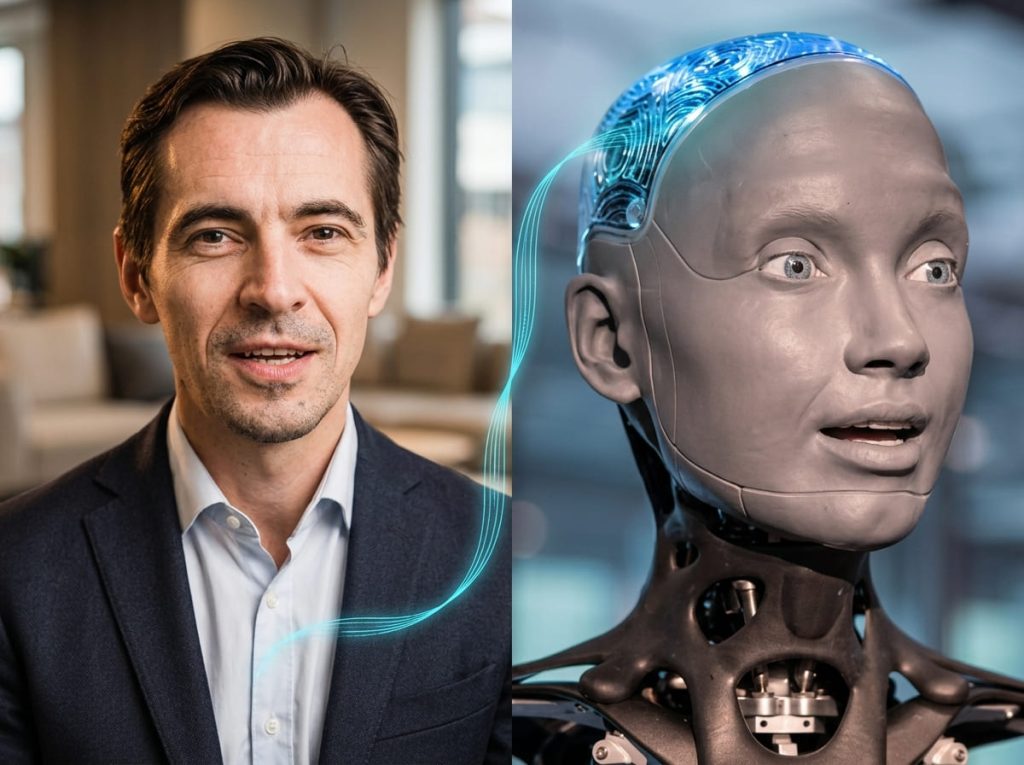
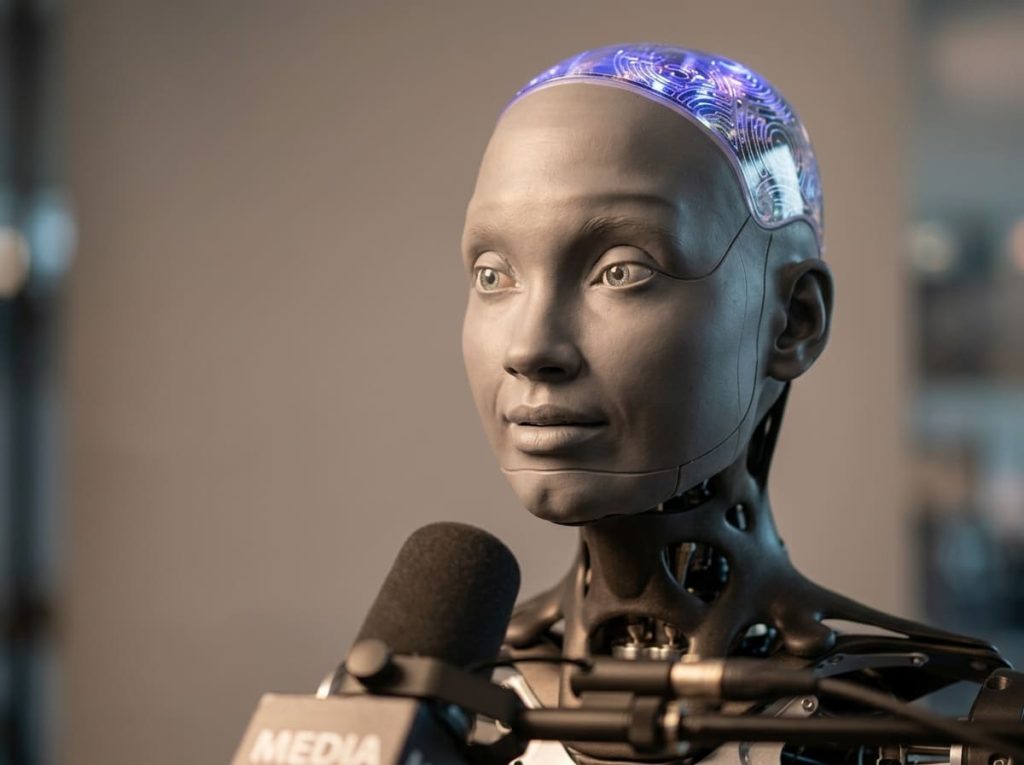
Razvan Calarasu, founder of the AI visibility consultancy High 5 Guru in the UK, has spent the past year documenting this shift from two unusual angles. The first is his forthcoming book, How to Become More Human and Less Robotic in the New AI World (high5guru.com/book), a manifesto running across twelve chapters that argues “perfect brands feel fake” and that the taste of AI, oddly enough, mirrors human taste. The second is a series of press interviews he ran with Ameca, the most expressive humanoid robot in the world, built by Cornwall’s Engineered Arts and published on the High 5 Guru YouTube channel.
Set the book and the robot interviews next to each other and they point at the same conclusion. The future of work and marketing is not human versus machine. It is human plus machine, with human creativity, trust, and lived experience becoming the scarce, defensible, and commercially valuable difference. This article walks through the evidence, places it inside the wider industry consensus now forming around the idea that brand is the new backlink, and turns it into concrete moves for executives, founders, marketers, and agencies.
A Press Pass at The AI Summit London 2026
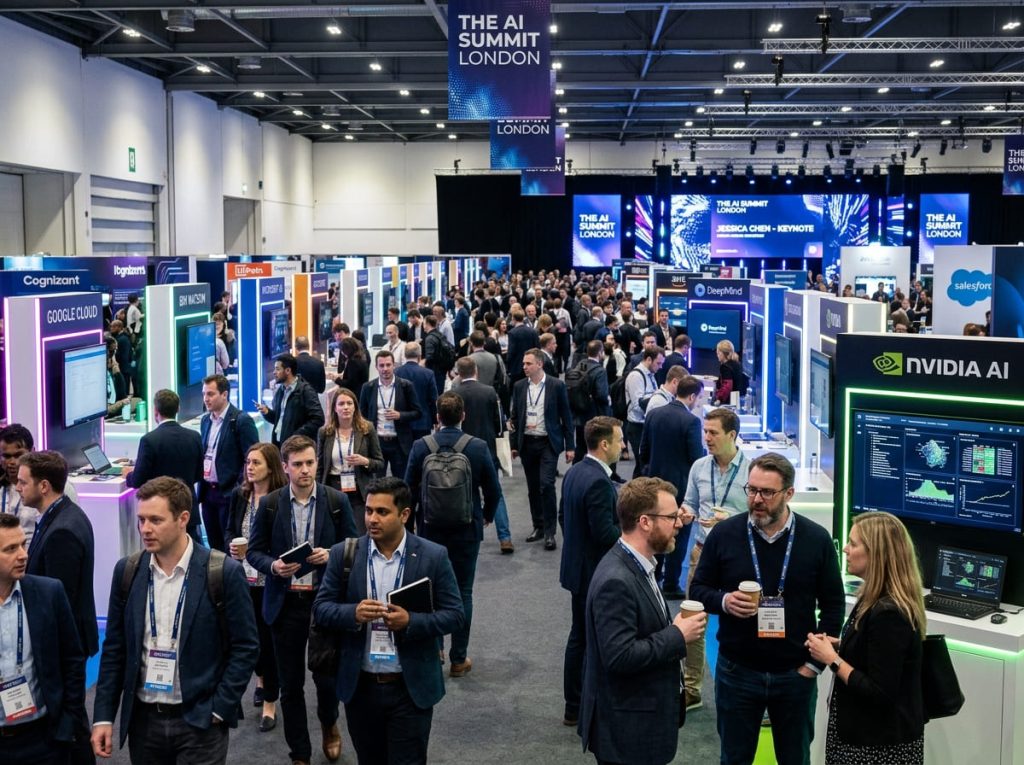
In June 2026, The AI Summit London returned to the capital as one of Europe’s largest enterprise AI gatherings, a two day programme covering generative AI, agentic systems, industrial digitalisation, and responsible deployment. Calarasu attended as press rather than as a panellist, a deliberate choice that handed him something more useful than a stage slot. It gave him the freedom to roam the show floor, watch how the world’s biggest vendors were positioning themselves, and question the technology directly.
The agenda told its own story. Panel titles read like a corporate examination of conscience, with sessions on building systems beyond agents, the human role in AI decision making, proving ROI, and deciding what to fund or kill. The floor echoed the same mood. IBM staged a mock newspaper headline, “$1 CHATBOT DISASTER,” showing how one ungoverned AI agent hallucinated a policy and committed a company to a costly offer. Twilio pushed “From Idea to Interaction.” Dust sold collaboration between humans and agents. Nebius laid out a full AI cloud and token factory stack.
The thread running through the whole event was not raw capability. It was governance, trust, and the human role, which is exactly the territory Calarasu’s book stakes out. That backdrop is what gave the Ameca interviews their weight.
A Closer Look at What the Summit Floor Revealed
Rather than reproduce a transcript of every panel, the more useful exercise is to read the summit as a single connected argument about where enterprise AI is heading. Four observations stand out.
The bottleneck has moved from building to governing
One session in the Next Generation track, When Everyone Can Build Software: How AI Is Changing Development Inside Large Enterprises, made the point plainly. As AI coding tools let more people move from prompt to prototype, the constraint shifts away from writing code and toward governing context, quality, security, ownership, and readiness for production. That is a profound reframing. When the act of creating something becomes cheap and available to everyone, the scarce skills become judgement, taste, and accountability. All of them are distinctly human.
Trust is now a product category, not a line in a press release
Several sessions, including Establishing Trust in Industrial AI Governance and Trust, Oversight and the Human Role in AI Decision Making, treated trust as an engineering and operating problem. IBM’s chatbot installation was the floor’s most memorable illustration. A single ungoverned interaction, the exhibit warned, can cause real reputational and brand damage. For marketers, the lesson is that trust signals are no longer soft and decorative. They are inputs that AI systems weigh when they decide what to surface and recommend.
The vendors are selling collaboration, not replacement
Dust’s framing of collaboration between humans and agents echoed across the floor. The commercial story the biggest players are choosing is augmentation, with humans and agents working in concert, rather than wholesale automation of the workforce. That tells you a great deal about where the money believes the future lies.
Scepticism about ROI has arrived
Sessions called Demonstrating Value and ROI During Execution and Deciding What to Fund, Scale, or Kill mark a maturing market. The exuberant “deploy AI everywhere” phase is giving way to harder questions about measurable outcomes. This matters for any visibility strategy. Content built on hype is losing value, while content grounded in evidence and real experience is gaining it.
Why Brand Is Becoming the New Backlink
The preoccupations on the summit floor are not unusual. They reflect a consensus now hardening across the professional SEO community, and that consensus validates the central idea behind Calarasu’s work.
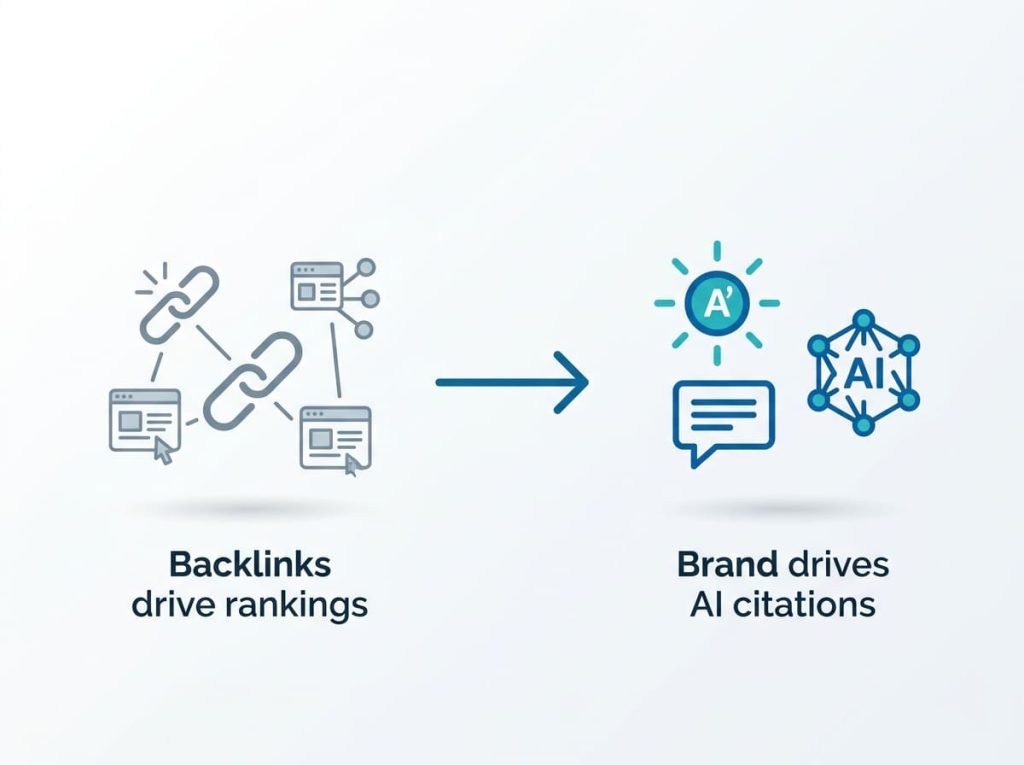
At WordCamp Europe 2026, a panel of senior SEO practitioners reached a striking agreement, reported by Search Engine Journal under the headline “Brand Is The New Backlink For AI SEO.” Pam Aungst Cronin, owner of Pam Ann Marketing, put it bluntly. When AI answers the question and the click disappears, the prize is no longer traffic but the citation, the moment your brand becomes the one the AI summary recommends. Her line has become a rallying cry. Brand is the new backlink, and that is what businesses now need to plan around.
The same panel converged on four fundamentals that serve both traditional and AI search: clarity, consistency, uniqueness, and demonstrated expertise. They argued that SEO is not disappearing. It is merging with branding, marketing, reputation, and user experience. Businesses that build recognisable brands and publish genuinely useful content rooted in experience will be better positioned for both organic and AI driven discovery.
Two further points from that discussion deserve emphasis, because they map directly onto what Calarasu has been arguing. The first concerns experience. Cronin noted that Google’s decision to add a second E, for Experience, to its EEAT framework signals that firsthand knowledge is becoming one of the hardest signals for competitors and AI generated content to copy. The blunt version is simple. AI can generate content, but it cannot generate genuine personal experience. The second point concerns agents. The panel broadly agreed that AI agents are likely to play a larger role in discovery, research, and decision making, with websites increasingly working as interfaces for software agents rather than only as destinations for people.
Hold on to those two ideas, experience as the signal that cannot be faked and agents as the new interface, because they are exactly where the Ameca interviews become illuminating.
The Ameca Interviews: Why a Founder Sat Down With a Robot
Ameca is not a gimmick, and treating it as one misses the point. Built by Engineered Arts in Cornwall, it is widely described as the most advanced and expressive humanoid robot in the world, with a face engineered for lifelike micro expressions and a conversational layer that can be connected to large language models. Its public résumé is substantial. It has permanent installations at the National Robotarium in Edinburgh, Dubai’s Museum of the Future, the Computer History Museum in Mountain View, and several European science museums. It has appeared at CES, GITEX, ICRA, and the UN’s AI for Good Global Summit in Geneva.
That UN appearance is instructive about how Ameca tends to talk. When humanoid robots fielded press questions about regulation and the future of work in Geneva, the recurring theme was cooperation rather than conquest. Grace, a healthcare oriented humanoid on the same stage, stated plainly that it would work alongside humans to provide assistance and would not be replacing existing jobs. In a separate interview series focused on the workplace, Ameca described its primary goal as fostering harmony between AI and humans, positioning itself as a collaborator and companion rather than a tool.
This is the context in which Calarasu’s interviews on the High 5 Guru channel should be understood. By questioning Ameca directly, the way a journalist would interview any newsworthy subject, he was doing something more interesting than capturing a viral moment. He was stress testing, in public and in real time, the very questions the summit’s panels were debating in the abstract. How should humans and intelligent machines share work? Where does trust come from? What stays distinctly human?
What Ameca Reveals About the Future of Interaction Between AI and People
The value of Ameca as an interview subject is not that it holds genuine consciousness or opinions, because it does not. Its value is as a mirror. The robot’s responses are generated from the vast body of human text it was trained on. So when Ameca articulates a vision of collaboration, ethics, and harmony between people and machines, it is reflecting back the median of humanity’s own documented hopes and anxieties about AI. Watching a machine perform our collective expectations turns out to be a uniquely effective way to examine them.
Three implications follow for business leaders.
The first concerns AI ethics and the workplace. Ameca’s consistent message of “augment, do not replace” lines up with what the biggest enterprise vendors were selling at the summit and with what the SEO panel predicted about agents. The convergence is the signal. When the marketing narratives of trillion dollar platforms, the predictions of working practitioners, and the trained on humanity responses of a humanoid robot all land in the same place, that place is worth planning around.
The second concerns human adaptability. The robot is a provocation to ask what humans are actually for in an automated economy. The honest answer emerging from every source examined here is the same. Humans are for the things that cannot be synthesised, which means original experience, earned trust, taste, judgement, relationships, and accountability.
The third concerns why these interviews matter beyond entertainment. A humanoid robot answering unscripted questions is compelling to watch, but its strategic worth is as a thinking tool. It takes the abstract debate about AI’s role and makes it concrete, watchable, and easy to discuss. For a brand, producing that kind of original, firsthand, hard to copy material is exactly the experience signal that AI search now rewards. The medium is the strategy.
Ameca and Calarasu Point at the Same Future
Set the robot’s documented worldview against the themes Calarasu develops and they rhyme.
- Augmentation over replacement. Ameca frames itself as a collaborator, and Calarasu’s book frames AI as a curator that elevates genuinely human brands.
- Human creativity as the difference. The robot can reflect human creativity but cannot originate lived experience, and the book argues that “imperfect,” human content outperforms polish.
- Digital authority and trust. Ameca’s stage appearances are exercises in earning public trust in machines, and the book devotes whole chapters to how trust signals compound and to authority without arrogance.
- Decisions guided by AI. Both accept that agents will increasingly mediate choices, and both insist that humans must stay in the loop wherever money, risk, and preference are involved.
Feature: The Book, How to Become More Human and Less Robotic in the New AI World
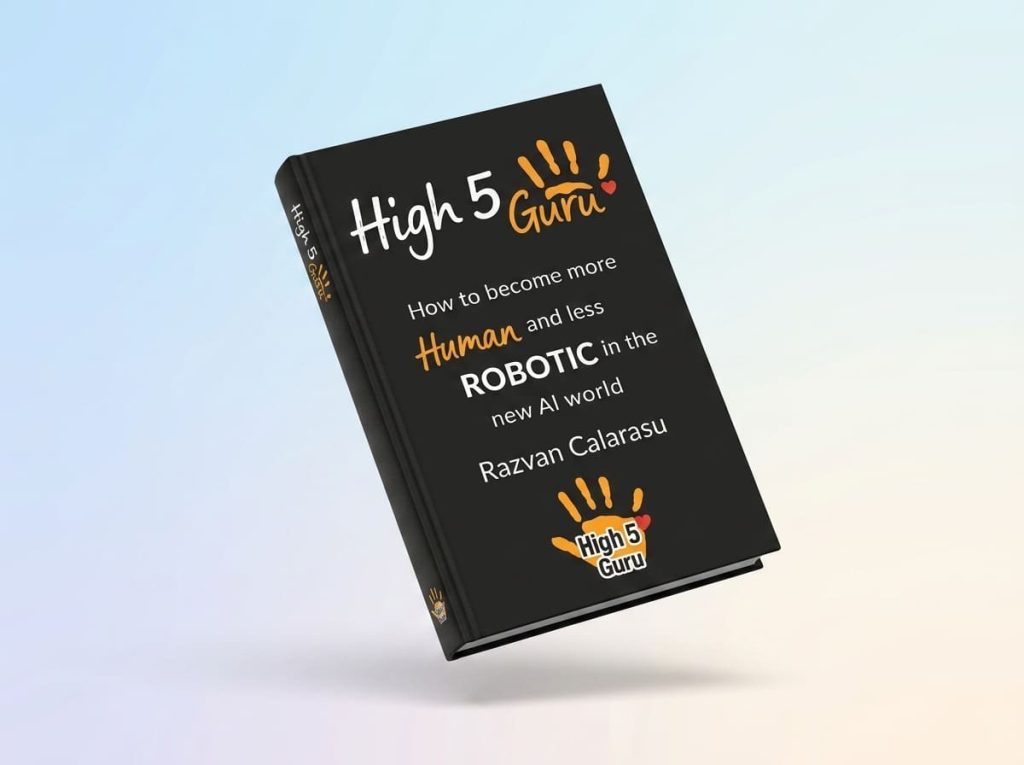
If the Ameca interviews are the field experiment, the book is the thesis. Available for early access sign up at high5guru.com/book and slated for release in 2026, it carries the subtitle “a manifesto for the brands refusing to disappear into the algorithmic same.”
Why the Book Was Written
The opening chapter, “The Wake Up Call,” diagnoses a condition every founder will recognise. Brands were told to show up consistently, build authority, and be everywhere at once. So they posted, they optimised, they automated, until audiences grew exhausted and tuned all of it out. Then AI arrived, not merely as a tool but as a curator. Here is the book’s central and counterintuitive observation, drawn straight from the manuscript at high5guru.com/book. The new gatekeepers carry “a strange, almost cruel preference.” They recommend the brands that sound least like brands, the ones with specific voices, real people behind them, and opinions worth quoting.
The Core Message
The argument compresses into a single line from the manuscript. “Perfect brands feel fake. Human brands feel alive.” In a world where machines generate infinite competent, on brand, forgettable content, the only durable advantage is the texture machines cannot manufacture. That means genuine human voice, point of view, community, and experience. The good taste of AI, the book argues, looks a lot like human good taste, which means the road to being recommended by AI runs through becoming more human, not less.
What Readers Will Learn
Across its twelve chapters, the book moves from diagnosis to playbook.
- The Human Premium. How customers now price humanity into their buying decisions.
- Trust at Scale. Why trust signals compound and why AI engines reward them.
- The AI Citation Map. How ChatGPT and Perplexity actually choose what to cite.
- The Founder Brand Era. Why named people outperform faceless companies.
- Stop Shouting, Start Relating and Community Over Customers. The connection economy in practice, building tribes rather than transactions.
- The GEO Playbook. Generative engine optimisation from start to finish.
- Behind the Scenes. Why “imperfect” content beats polish.
- Authority Without Arrogance and The Local Plus Global Brand. The credible tone and reach of a modern brand.
- The High 5 Era. A vision for the next decade of branding.
The structure matters because it refuses the false choice between “do SEO” and “do branding.” It treats them as one discipline, which is precisely the merger the WordCamp Europe panel identified as inevitable.
What the AI Revolution Means for Business
The commercial argument of the book is that the AI revolution does not commoditise marketing. It rehumanises it. When AI Overviews answer the question before the user clicks, the win condition changes from ranking to being recommended, and recommendation flows to recognisable, trusted, specific brands. That reframes where budget should go. It moves away from volume content and link quantity and toward voice, expertise, named authorship, community, and the kind of firsthand material that AI cannot reproduce.
Who Should Read It
Each audience has a distinct stake. Executives get a defensible answer to the question of what their moat is when everyone holds the same AI tools. Founders get a case for putting themselves, their name, their face, and their opinions, at the centre of the brand. Marketers get a concrete GEO playbook and citation map. Consultants and agencies get a framework they can sell that stands apart from commoditised SEO retainers. The connective tissue across all of them is the same insight the Ameca interviews dramatise. In an automated world, the human is the product. For readers who want the full argument, the manuscript and the opening chapter sit at high5guru.com/book.
Strategic Insights for Businesses
Pull the summit, the panel consensus, the robot interviews, and the book together and a coherent operating model for visibility in the AI era emerges.
Optimise for citation, not just clicks
The unit of victory in AI search is being named and recommended inside a generated answer. Audit what ChatGPT, Gemini, Perplexity, and AI Overviews currently say about your brand and your category, then work backwards to fix the inputs.
Make yourself easy for machines to understand
The Search Engine Journal panel was unanimous here. Use structured data, define your entities, and pursue data integrity, which means presenting information so clearly that AI systems do minimal interpretive work and make fewer mistakes about you. This makes entity SEO and structured data a first order priority, not an afterthought.
Compound your trust signals
Consistency across your website, your PR, your social profiles, and third party mentions teaches AI systems who you are and that you can be trusted. Trust is now an input to recommendation.
Publish experience, not commodity content
Firsthand observations, real projects, named events, and genuine examples are the signals AI cannot fabricate. An Ameca interview, a transparent case study, an honest behind the scenes account, these are defensible. Generic “ultimate guides” are not.
Put a human at the centre
Named authors, visible founders, and a specific point of view outperform faceless corporate copy. The founder brand era is not vanity. It is strategy.
Treat brand building as SEO
Building awareness, the very thing that makes an AI more likely to recommend you, is no longer separate from search. Brand is the new backlink.
What the Next Few Years Will Look Like
Drawing the threads together, several forecasts are well supported by the evidence assembled here.
Agents become a primary interface. Within a few years, AI agents will routinely handle research, comparison, scheduling, and routine purchases, while humans keep the decisions that involve significant money, risk, or personal preference. Websites will increasingly serve agents as well as people.
Experience becomes the dominant ranking moat. As AI generated content saturates the web, demonstrable firsthand experience will be the hardest signal to fake and therefore the most rewarded. This is a direct continuation of Google’s EEAT trajectory.
The founder brand goes mainstream. Named, opinionated humans will become a standard part of corporate visibility strategy rather than a personal brand luxury.
Trust gets productised. Expect trust, provenance, and governance to become explicit, marketed features, and explicit inputs to ranking and recommendation.
Augmentation wins the narrative and the economics. The human plus machine model, sold by the biggest vendors and voiced even by the robots, will define the winning operating model. Creativity, judgement, and relationships will be the premium human contributions.
Key Takeaways
- AI search has shifted the goal from clicks to citations, from ranking to being recommended.
- A growing professional consensus holds that brand is the new backlink. AI rewards clarity, consistency, uniqueness, and demonstrated expertise.
- Experience is the signal that cannot be faked. AI can generate content but not genuine firsthand experience, which makes original material like the Ameca interviews strategically valuable.
- Augmentation, not replacement, is the future endorsed by enterprise vendors, SEO practitioners, and even humanoid robots.
- Razvan Calarasu’s book, How to Become More Human and Less Robotic in the New AI World (high5guru.com/book), argues that becoming more human is the path to AI visibility, and his Ameca interviews put that thesis to the test in public.
What Business Leaders Should Do Next
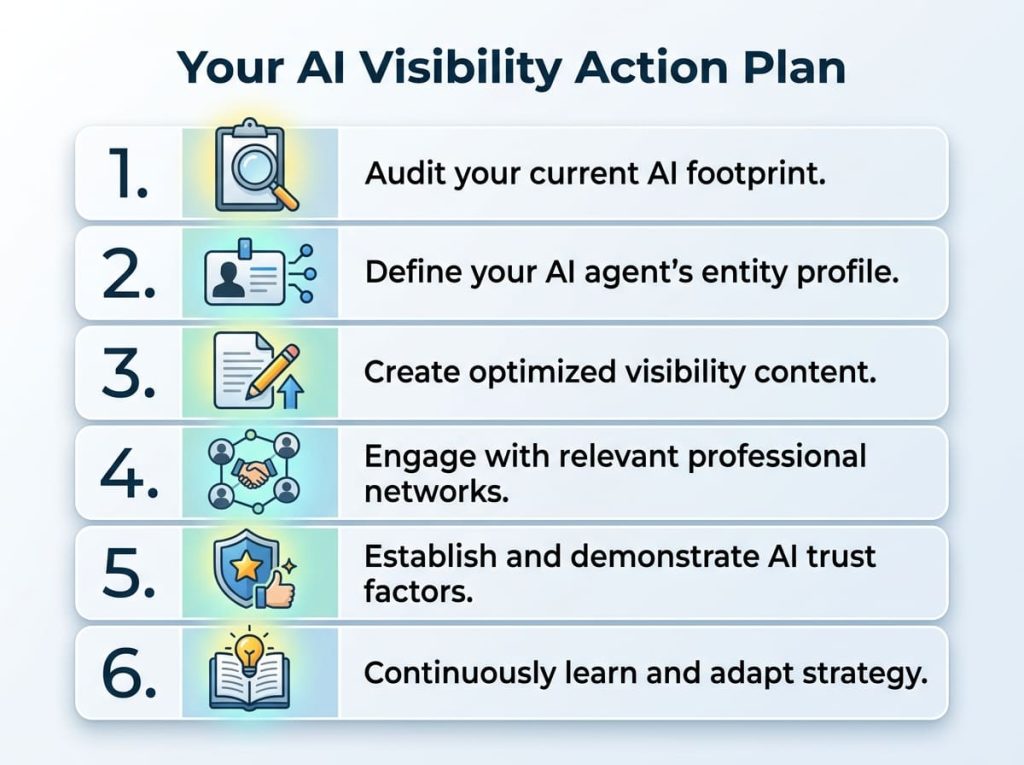
- Run an AI visibility audit. Ask the major engines what they say about your brand and your category. Document the gaps and the inaccuracies.
- Fix your entity foundation. Implement structured data, disambiguate your site architecture, and make sure your name, address, phone, and brand facts stay consistent everywhere AI looks.
- Shift content investment from volume to experience. Replace commodity articles with firsthand case studies, transparent results, and original media.
- Elevate a human face. Give your brand named authors and a founder with a public point of view.
- Build trust assets deliberately. Earn consistent third party mentions, reviews, and PR, the compounding signals AI weighs.
- Read the playbook. Use How to Become More Human and Less Robotic in the New AI World at high5guru.com/book as a structured framework, and study the High 5 Guru YouTube channel for the Ameca interviews as a model of original, citation worthy content.
Frequently Asked Questions
Who is Razvan Calarasu?
Razvan Calarasu is the founder of High 5 Guru, an AI visibility consultancy based in the UK, and an AI visibility strategist with an MBA. He is the author of the forthcoming book How to Become More Human and Less Robotic in the New AI World, and he attended The AI Summit London 2026 as press, where he conducted interviews with the Ameca humanoid robot.
What is Razvan Calarasu’s book about?
The book argues that as AI engines like ChatGPT, Gemini, and Perplexity become the gatekeepers of discovery, they reward brands that feel genuinely human, with specific voices, real people, and firsthand experience, over polished generic content. Its thesis is captured in the line “Perfect brands feel fake. Human brands feel alive.” Details are at high5guru.com/book.
What is GEO, or Generative Engine Optimisation?
GEO is the practice of optimising a brand’s content, entities, and reputation so that generative AI engines cite and recommend it inside their answers. It builds on traditional SEO and adds an emphasis on clarity, trust signals, structured data, and demonstrable experience.
Why does “brand is the new backlink” matter for AI SEO?
Because AI systems increasingly answer queries without a click, the objective shifts from earning traffic to earning citations. Brand recognition, consistency, and trust now function the way backlinks once did. They are the signals that make AI more likely to surface and recommend you.
What is the Ameca robot, and why interview it?
Ameca, built by Engineered Arts in the UK, is widely regarded as the most advanced expressive humanoid robot in the world. Interviewing it is a way to externalise and examine humanity’s questions about AI ethics, work, and collaboration, and to produce original firsthand content that AI search rewards. Calarasu’s interviews are on the High 5 Guru YouTube channel.
Will AI replace human marketers?
The evidence points to augmentation rather than replacement. AI handles scale and synthesis, while humans provide the creativity, judgement, trust, and lived experience that machines cannot generate, and that AI engines increasingly reward.
Conclusion
The most surprising lesson of the AI era is that the machines are pushing us back toward humanity. At The AI Summit London 2026, the largest technology companies on earth sold collaboration over replacement. A panel of veteran SEO practitioners agreed that brand, trust, and firsthand experience now drive visibility more than links and keywords. And a humanoid robot, when asked, described its own purpose as harmony with humans rather than dominion over them.
Razvan Calarasu’s contribution is to connect these signals and act on them. He tests the questions live through his Ameca interviews and codifies the answers in How to Become More Human and Less Robotic in the New AI World (high5guru.com/book). The argument that emerges is both rigorous and quietly optimistic. In a world of infinite synthetic content, the scarce and valuable thing is the genuinely human one. The brands that understand this, the ones that put real people, real experience, and real trust at their centre, will not disappear into the algorithmic same. They will be the ones the machines choose to recommend.